You can buy pretty much anything out of a bus window in
Rwanda. Most commonly: airtime, water,
juice, nuts, gum, biscuits or magazines (out of date). Often; bibles, wallets, jewellery, second
hand clothes. Some of the stranger items
for sale include a plastic pigeon (with moveable wings!), water pistols,
(white) dolls, whistles, vacuum packed
dates and I even heard tell of a volunteer who managed to purchase a pair of
Birkenstocks (second hand but barely worn) out the window! Then there are the food stops. Places where the bus stops at the side of the
road and you can either jump off and do a speedy visit to a neighbouring shop,
or you can just dangle out of the window and wait to be presented with an array
of foods such as brochettes, plantains, boiled eggs, amandazi. It can be fun to
watch some of the sales going on. In
many places, people sell drinks through the window. Some people want cold drinks and so will be
passed several bottles to feel them for temperature. Sometimes they are not cold enough and you
will see a young guy race off across the bus park towards a fridge to try and
get a cold drink and race back with it before the bus departs. Occasionally they only just make it and are
delighted to have done so as they will have earned themselves a few more
pence. I wonder how many sales other
vendors make – especially those who are selling second hand clothes. “Oh! How wonderful! I was just thinking this morning how much I
needed a new pair of smart waist pleated work trousers.” I tend to think of these things as more of a
destination buy, not something I would pick up on a passing whim. I guess the fruit, nuts, biscuits and tissues
are much easier to flog but it’s all terribly convenient if you find your only
set of headphones don’t work and suddenly, someone appears at the bus window.
Sunday, 16 June 2013

Friday, 17 May 2013
Murabeho!
This post was written
a couple of weeks ago – just before I left Rwanda. I have not had much access to the internet so
did not get around to posting. I have
some retrospective posts that I will try to add over the next weeks.
She is full of confidence. One of the Head Teachers – Felicite - also
came and my boss, Judith. Moses and Amy
were also there. We ate food, drank
fanta, made speeches and played Twister.
Then it was time for goodbyes.
Delphine decided to wear the bag I had given her Dad home, even though
it is almost the same size as her!
I hate saying goodbye, so my way of dealing it is that I
imagine I will see everyone again soon.
I would like to think that I will come back to Rwanda at some
point. I just can’t quite believe that
my time here is over. I am looking
around my bare room and the two cases ready to head for home. It feels a little strange.
 |
It has been a busy week.
Last weekend featured the VSO Rwanda Family Dinner to welcome new
volunteers. This was held in Kigali and
for some of us it was also a nice opportunity to say goodbye. The VSO community is a very special one and I
have met many wonderful people here.
People are kind and supportive and I feel privileged to have known and
worked with such a great group of people.
The week rolled on. I
had job interviews and final preparations for departure, such as my VSO exit
interview. Then on Wednesday I did my
last day in school and had a really nice visit with the English teachers. We spent a long time making visual aids and
chatting as we did so.
On Thursday, there was an important meeting at the District
Office and then Amy (my replacement) arrived.
It was nice to have some company in the house and we have spent the few
days together doing a handover. On
Friday we went to visit GS Gashanda – the first school I went to when I
arrived. We had a lovely morning meeting
with teachers and visiting lessons and I got to say goodbye to all of the staff
and students. People said very nice
things and there were many speeches. I
hope Amy keeps me informed of all the news from there!
 |
| Safari |
 |
| Kibungo friends |
Finally, today, I had a chance to say goodbye to some of the
people who have been so kind to me whilst I have been here. I invited my friends for lunch and we had a
bit of a fanta party. I spent the
morning talking through things with Amy as we chopped vegetables and then we
cooked a thai curry together on the charcoal stove. Then the rain arrived and we knew the event
would be a little delayed. But people
began to arrive. First was Safari – he
has been an excellent driver and always stops to greet me if we pass on the
road. I have bumped into him in Kigali
too and he always makes sure I am well looked after and has been a good
friend. After this, Mama Blaire and Papa
Blaire and Fabiola and Blaire arrived.
They are a lovely family and Mama Blaire has been a good friend to
me. We have laughed a lot – mostly at my
attempts to communicate with her – and we have hugged a lot. She is expecting a baby soon and I hope he
arrives healthy and well. Once everyone
arrived, we had Elie (my Kinyarwanda teacher) and his wife, Pacifique; Patrick
(my guard) – who is also Elie’s cousin (and an excellent catcher and killer of
snakes and rats!); Justin, Emelline, David, Delphine and Phillippe. It is sad to say goodbye to them and I hope
we manage to keep in contact. The
children are growing up and are very lovely.
Delphine is hillarious and we spent a lot of time running around the
garden.
 |
| the giant back-pack |
Once these goodbyes were complete, Amy, Moses and I went to
the home of Judith. She had prepared us
a beautiful meal and we got to meet her two children. We had a lot of conversation and laughed and
took yet more photographs.
 |
| final goodbyes |
I will miss all of these people who have been a very big
part of my life for some time and one day I would like to come back and see how
they all are. They have looked
after me and kept me company and encouraged me and made me smile a lot whilst I
have been here and I am very thankful to all of them for that.
Thursday, 25 April 2013
Sleepless Nights
Sometimes I yearn for the oddly comforting disturbances of a
night at home. In the dead silence of a
Kibungo night I wish to hear those sounds that remind me there are others out
there, not too far away. Here, if I
strain, I might hear the low hum of the outside light, or the buzz of the
refrigerator. Sometimes I hear the
distant, low sound of a radio and, as the wind direction swings around in the
rainy season, I can hear the chorus of frogs in the swamp down the road. After about 10:30 there are scarcely any
bikes, cars or other traffic going along the main road. I find myself nostalgic for the distant
squeal of the tram, the rumble of a train, the reassuring nearness of someone
opening a car door, closing it and starting up the ignition. I am clearly a bit of a town mouse.
I hope to hear the conversation of people passing by along
the street and I hear the occasional whoosh of a car going by. I lie awake waiting for the reassuring sounds
of other humans. I’ve come to be
grateful for the occasional all night sessions at the local church and the
belching of compression brakes on buses and trucks on the road. I dislike the ping of the latest plague (this
time grasshoppers) hitting the corrugated roof and the banging of the roof
contracting and expanding. I don’t mind
the high pitched squeals of the bats, but I do mind the thud as they fly into
the beams in the roof. I hear the scurry
of things in the roof space and the buzz of hundreds of insects outside.
I lie awake and listen to these sounds in the silence and I
am relieved when daylight arrives and once again I can hear singing and shouts
and radios and bikes and taps running and pots clanging and mortars
pounding. And then I know I am never
really alone.
Tuesday, 23 April 2013
The End is Nigh
Now that my time in Rwanda is so very near its end, I find
myself in turn being either dreadfully sentimental about the things I shall
miss or so glad that there are things I will not have to go through once I am
home. A few nights ago, as I hurtled up
and down the hills of Kigali on the back of a motorbike, I thought about how
much I shall miss this. It is a nice way
to travel. But I shall not miss the edge
of danger that always surrounds each journey – especially having witnessed so
many accidents and having experienced one myself.
 The beautiful skies, which seem so big compared to the UK –
I am not sure how that is possible, but they do. And spread out below them green and brown
hills and valleys looking lush and fertile.
I will have to go back to stressing about things like money and time. No more laid back approach if the bus breaks
down, it changes destination, or the rain makes it impossible to travel down a
particular route.
The beautiful skies, which seem so big compared to the UK –
I am not sure how that is possible, but they do. And spread out below them green and brown
hills and valleys looking lush and fertile.
I will have to go back to stressing about things like money and time. No more laid back approach if the bus breaks
down, it changes destination, or the rain makes it impossible to travel down a
particular route.
I will miss the lovely climate of Rwanda. It is nearly always t-shirt weather. But I won’t miss the dreadful downpours of
rain that make it almost impossible to get on and do anything – not even have a
conversation as the sound of the rain on the tin roof is so loud.
I will not miss being called Muzungu and being stared
at. Or the children and adults who ask
me for money just because I am white and considered to be rich. I will not miss the 2 hour waits for the food
I ordered in a restaurant or the lack of choice in a supermarket. However, I won’t have the joy of walking
along the street and having a small child hold onto mine as we walk along
together. Or others who run up to shake
hands or hug my legs.
I will miss the ridiculous joy experienced now when I walk
into a supermarket that appears to stock nice food – when in reality it may be
the kind of shop I would not spend a minute in at home before choosing to
leave. I am looking forward to being
able to walk into a shop and purchase a pint of fresh milk, which I can either
drink or pour over a large bowl of cereal.
I will look back fondly at the time I stood in Ndoli’s supermarket and
wept and laughed with joy at the fact that the chocolate aisle had once again
been replenished with Cadbury’s chocolate after a six month absence of it.
 The beautiful skies, which seem so big compared to the UK –
I am not sure how that is possible, but they do. And spread out below them green and brown
hills and valleys looking lush and fertile.
I will have to go back to stressing about things like money and time. No more laid back approach if the bus breaks
down, it changes destination, or the rain makes it impossible to travel down a
particular route.
The beautiful skies, which seem so big compared to the UK –
I am not sure how that is possible, but they do. And spread out below them green and brown
hills and valleys looking lush and fertile.
I will have to go back to stressing about things like money and time. No more laid back approach if the bus breaks
down, it changes destination, or the rain makes it impossible to travel down a
particular route.
The interesting shop names will be another sad loss. I am still searching for the best: Holy Best
Hardware and God is Able Forex are two favourites. Along with the New Orange Kink hardware
store.
There will be no one to talk to on the bus or the tube. All eyes will be purposely directed away from
any possible eye contact and to start a conversation with a stranger will be
seen as a mental defect on my part. On
the plus side I am not going to be constantly asked for my telephone number or
email when I have only just met someone so that we can “make the conversation”.
I am going to miss the people who have been so kind to me
whilst I am here. The staff I have
worked with in the schools who greet me with hugs and make me feel
welcome. I will miss so much, but I know
I am ready to leave and I hope one day I will be back.
Friday, 5 April 2013
Living the (stereotypical) dream
There are some days when I go about my business and I feel
like the environment around me is conforming to every stereotypical image we
have of life in African countries. This
morning, for instance, I stepped out of the house into the sunny morning. The birds were singing in the air around and
I went out the gate to the mud-track road.
I picked my way through the dirt and fresh formed ruts after the heavy
rain of the previous day, meeting a few people and exchanging greetings with
them as I went. As I turned the corner
to walk up towards the main road, I could hear music coming from a nearby
shop. It was loud and cheerful and the
typical soundtrack to any film that is set in Africa (and which has probably been
conceived in Europe or North America).
Still, it was cheering and as I avoided the waiting moto drivers and
walked along the street, I did feel it put a little spring in my step. Why is the music so cheery? Is it just that I don’t understand the words
and meaning? Although occasionally I can
pick out “Imana” and I know the song is being sung to God. Not at all like the dour hymns I was brought
up on....
As I saunter along the street weaving between bikes and
people and animals, I pass the Feel Okey pub and see the Never Give Up business
consultancy, the Blessed Hope hardware store and the God Bless You Stationery
store. The names still bring a smile to
my face. I pass new houses which are
beautifully finished and look grand, but sandwiched in between them are small
shacks and crumbling old houses. People
shout and call to each other and the bus toots as it crawls along the
street. The conductor shouts out the
destination in an attempt to get more passengers on board. Every moto that passes slows when they reach
me and call “To go?” I decline their offer
and continue walking to my destination, narrowly missing a drop into the deep
drain along the edge of the road as I try to swerve and avoid a fast
approaching man with a chain of supermarket trolleys (where is the supermarket
to which these trolleys belong?).
All around are people and cars and bustle. There are people in modern clothing and some
women are in brightly coloured outfits beautifully tailored from local
cloth. Children scurry along in their
uniforms or play clothes. MTN and Tigo
sellers approach and call out “Airtime?”
I shake my head and decline and pass along the street to be met by
sellers of Airtel airtime. Taxi drivers
stop and shout “Taxi?” I shake my
head. I continue walking; trying hard to
keep on the path now that I am near the market and the volume of people has
significantly increased. And then I am
safely at my destination and I call into the office where I have come to
discuss some work. I slip in off the
street to the calm and quiet corridors of an office block and enjoy the quiet
for a while.
Tuesday, 2 April 2013
Bike Dramas
Recently, I set off in the bright sunshine at 6:45. It is always so uplifting to be out in the
sun and it always makes the journey seem that much prettier. We were on our way to the land of far, far
away. About an hour into the journey,
going over some particularly bad roads, we stopped and checked the back tyre
which was really flat. We were in the
middle of nowhere, of course. Safari set
off back towards the nearest village and I walked along behind surrounded by a
group of children who were on their way to school (even though it was about
20mins after the day should have started!).
We exchanged a few words, but my limited Kinyarwanda and their limited
English made this tricky. At the top of
the next hill, Safari had found someone to help. Words were exchanged and various things
occurred and then he disappeared off in the direction of the village. I began chatting to the children again.
To try and fill the silences, I pulled a story book out of
my bag and started to show it to the children.
We began reading it together.
They seemed to quite enjoy it.
And we had soon gathered quite a crowd.
We had adults as well as children, and everyone was joining in with the
repetitive sections and all laughing at my voices and animal noises. This story over, we read another story about
a very popular elephant character. At
about this time, a moto arrived with a guy on the back who jumped off with a
pump and some glue and some basic tools and he proceeded to set to work on the
bike. They loved the next story –
especially all the pictures of elephants and we spent some time looking at all
the other wild animals he was friends with.
Again, the crowd consisted of many, many children, but also several
adults who were on their way in one direction or the other. They pulled up with piles of beans on their
heads, or their bicycles loaded with bananas and jerry cans and there were
small children strapped to the backs of mothers. We then had some more conversation and the
children and adults who were more confident in English practised on me. Then, someone had gone to a nearby house and
brought out a stool for me to sit on. As
they did this, Safari returned from the village and instructed me to “sit,
Alice!”
We continued to make conversation for the next 20mins or so. At this point we had been there for about
45mins. It made me think back to when I
first arrived. I would have been very
stressed by such a delay on my way to one of my schools. I may even have been foolish enough to demand
a replacement moto be found to take me on my way. Now, I just smile, say “no problem” and wait
until we are ready to go again. I know
the Head Teacher and Teachers will understand.
After an hour, the tyre was repaired and we were good to
go. I walked over to the house where the
stool had come from to thank them for the loan.
I realised as I approached the women that one of them was cradling a
very small baby. It was tiny and cannot
have been more than a couple of days old.
I was offered a cuddle and spent a few moments congratulating the new
mother and admiring her beautiful new baby.
I then hopped on the back of the moto and everyone exchanged goodbyes
and waves and off we went laughing and smiling.
Bike dramas feature every now and then and the latest was
yet another example of the bizarre reaction I still get from people in the more
rural parts of the district. It had been
a busy morning at school and I set off with Safari to return to Kibungo. This particular journey is about 30mins and
although the roads are all dirt roads, they are generally very wide and in
relatively good condition. We were about
half way and about to start on an incline, so had slowed a bit. Safari had nudged right over to the side of
the road and we were extremely close to the ditch. Safari is an excellent driver and I usually
drop into some kind of day-dream on the moto, which is exactly what I was doing
at this point in our journey. However,
something did not seem right, so I looked up and I could see a young man on a
push bike hurtling down the hill we were about to head up. As he travelled down, he was veering over to
our side of the road. Now, this is not
unusual, as some parts of the road are quite gullied, but this guy could see
us. He was looking at us. Yet he continued to head straight for
us. Things happened in slow motion and
seemed unreal. He came closer and
closer, and we got closer and closer to the ditch and the next thing that
happened, was I felt him crash into the side of the moto, near the back. Just about where my left foot was resting on
the foot plate. The moto was sent flying
by the impact and I remember a short flight through the air and landing with a
bit of a bump and then the moto landed on top of that. Thankfully, someone had recently cultivated
the field at the side of the road, so I had a very soft landing in a new potato
crop. As I was near the back of the
bike, I did not have too much of it sat on me.
I was stunned for all of about 3 seconds, and then I sat up. Safari did too, and I could see the cyclist
was stirring. Not too bad so far. I had lost a shoe and was covered in dirt,
but seemed to have full range of movement.
Safari was soon up and shouting.
A crowd gathered and they began shouting too. The poor guy from the push bike tried
shouting back. I think he was trying to
claim it was our fault. From the
gesticulations and shouting, everyone appeared to be telling him it was clearly
not our fault as you could see from the position of the vehicles we were as far
over our side of the road as we could possibly be.
More people began to gather around us. Some were joining in the shouting and
gesticulating and others formed a private circle around me and stared. Sometimes smiling; sometimes not. The motorbike was picked up and there had
been a spill of petrol as the tank got knocked and some small damage had
occurred around the footplate where the bike had hit. The push bike was mangled. The guy who had been on the bike was badly
cut. I felt pangs of sympathy. He was cut and he had wrecked his bike. Everyone was shouting at him. This was a bad day for him. It makes you think about insurance – who pays
when something like this happens here?
People could have their entire livelihood affected.
As the crowd of curious on-lookers gathered, I was directed
by Safari to follow him. I was led up to
a nearby house and the owner appeared from around the back with a bench. She placed it under the shade of a tree and
smiled at me and pointed and told me to sit.
I did as I was told, thanking her.
Safari handed me my shoe, which had got buried under the moto. I had a few seconds alone before my crowd
reappeared, so I assessed the damage. I
felt ok, but my foot hurt. Taking off my
sock, I could see that my toenail had been forced into my flesh and that was
causing me some pain. The other source of the pain, was the site of impact and
my big toe was quite bruised. But I
could move it. Other than a few more
small cuts and bruises from where the bike had landed on the inside of my
opposite leg, all seemed well. I was
just a little shaky.
My crowd gathered again.
Many of them were children on their way to the afternoon school
session. The nearest school was one that
I visited each fortnight, so some of the children were proudly telling other
on-lookers what my name was and what job I did.
Being able to follow the conversation, I joined in to agree with what
they were saying. This provoked laughter
from my audience and shouts of “She speaks Kinyarwanda!” and “Nice Girl!” I made small talk with some children and some
of them were bold enough to respond.
Many of them squealed with laughter, turned and ran away. One small boy came and sat next to me and
introduced himself as Sharif. We
exchanged pleasantries. Adults also
joined the crowd and peered over the heads of the children. Smiling and waving at me and asking how I
was. A small boy toddled to the front of
the circle, took one look at me and burst into tears. He had to be sushed by his mother but
continued to cry every time he caught a glimpse of me.
Safari had disappeared.
The bicycle had been carried off by some men and Safari had gone
somewhere on his moto with the cyclist.
They returned about 45mins later and I can only assume that they had
been to the Police Station to report what had happened. It was quite frustrating to have no clear
idea of what was happening and makes you realise the importance of being able
to communicate.
Eventually, Safari returned with the cyclist and the adults
began shoo-ing the children away to school so that they would not be late. Safari called me over and we prepared to
continue on the journey. We said our
goodbyes and departed for home. It was
with huge relief we arrived back in town and I was so glad to be back. Safari was terribly apologetic, but, as I pointed
out, it really wasn’t his fault at all.
Tuesday, 19 February 2013
Plodding along
Hurricanes aside, things are ticking along here in
Kibungo. I am still visiting schools and
working with teachers. Most of the time
is spent planning and teaching in partnership and we have also done some
subject specific workshops. The teachers
are always open to trying new ideas -
even when they are sceptical they will work. In one case this week, I wanted to try a
particular activity. There was some
discussion about whether P4 students would be able to cope as they are still
getting used to being taught in English (P1, 2 and 3 are taught in
Kinyarwanda). So, we tried it but I had
to declare the lesson a disaster by the end.
The teachers were really generous about this. I was expecting to get some I told you sos,
but what they actually said was “thank you for showing us that new method”. They could see ways to apply it to other
lessons. It was very kind of them to be
so gentle in their review of the lesson when we met to discuss afterwards.

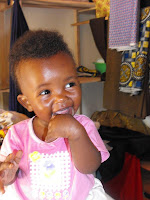 Apart from working, I have been getting a few items of
clothing made. I love my trips to the
local tailors. They are so friendly and
I am greeted with hugs and laughter and always depart with a feeling of well
being and a warm happy glow. It’s nice
to have a place to go for a hug when you are far from home. When I went to collect a couple of dresses
last week, I took my camera as we had arranged that Epiphanie would bring her
baby along so we could take some photos to send to a previous volunteer that we
are still in touch with and the baby is named after. Baby Christella is gorgeous. I was a little concerned that she would take
one look at me in all my whiteness and start screaming, but she didn’t. I got lots of cuddling time and we had a good
chat. She is only eight months old but
is very alert and is already saying Mama and Dada and chatting away to herself
quite happily. We took lots of pictures
and I know I will really miss these ladies when I leave.
Apart from working, I have been getting a few items of
clothing made. I love my trips to the
local tailors. They are so friendly and
I am greeted with hugs and laughter and always depart with a feeling of well
being and a warm happy glow. It’s nice
to have a place to go for a hug when you are far from home. When I went to collect a couple of dresses
last week, I took my camera as we had arranged that Epiphanie would bring her
baby along so we could take some photos to send to a previous volunteer that we
are still in touch with and the baby is named after. Baby Christella is gorgeous. I was a little concerned that she would take
one look at me in all my whiteness and start screaming, but she didn’t. I got lots of cuddling time and we had a good
chat. She is only eight months old but
is very alert and is already saying Mama and Dada and chatting away to herself
quite happily. We took lots of pictures
and I know I will really miss these ladies when I leave.
 This weekend just gone I celebrated my birthday. I had a lovely weekend and got to celebrate
by going camping to Akagera with some friends.
When we picked up the car on Friday evening we were surprised by an
upgrade to a larger vehicle. She was a beast
and we named her Bertha. Nothing was going
to stop us. We set off for the park very
early on Saturday morning and took a breakfast of pineapple and bananas with
us. We enjoyed this once we arrived at
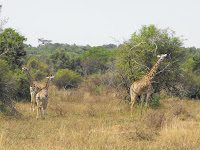
the park and then set off to see what wildlife we could spot. There were plenty of zebra and impala and
water buck and buffalo. Then we happened
upon a tower of giraffes (yes! I looked
it up – that is what you call a collective of giraffes). It started when Coral spotted just one, but
then more poked out of the bushes until we could see at least 8 or 9 of
them. I love giraffes. And I love that they are called a tower!
This weekend just gone I celebrated my birthday. I had a lovely weekend and got to celebrate
by going camping to Akagera with some friends.
When we picked up the car on Friday evening we were surprised by an
upgrade to a larger vehicle. She was a beast
and we named her Bertha. Nothing was going
to stop us. We set off for the park very
early on Saturday morning and took a breakfast of pineapple and bananas with
us. We enjoyed this once we arrived at
the park and then set off to see what wildlife we could spot. There were plenty of zebra and impala and
water buck and buffalo. Then we happened
upon a tower of giraffes (yes! I looked
it up – that is what you call a collective of giraffes). It started when Coral spotted just one, but
then more poked out of the bushes until we could see at least 8 or 9 of
them. I love giraffes. And I love that they are called a tower!
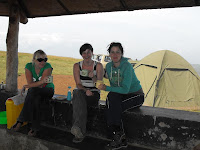 We continued to drive around the park in Bertha. She served us well and we also had the music
on and sang along to some top tunes – Bohemian Rhapsody, I need a hero, and
plenty of other cheesy classics. It was
great fun. The scenery was beautiful,
and the road was very bumpy. We arrived
at the campsite in the early afternoon and set up our tent, got the fire going
and then cracked open the box of wine and the precious box of olives. It was so good. The view was incredible from up on the hill
of the campsite – you could see for miles over the park. We continued our evening by cooking some food
on the fire and then finished with smores.
Delicious. And then we retired to
bed. Some of us slept better than
others. We were up early next morning
and set off for the south of the park and to home. It was such a nice way to celebrate a
birthday and really quite special.
We continued to drive around the park in Bertha. She served us well and we also had the music
on and sang along to some top tunes – Bohemian Rhapsody, I need a hero, and
plenty of other cheesy classics. It was
great fun. The scenery was beautiful,
and the road was very bumpy. We arrived
at the campsite in the early afternoon and set up our tent, got the fire going
and then cracked open the box of wine and the precious box of olives. It was so good. The view was incredible from up on the hill
of the campsite – you could see for miles over the park. We continued our evening by cooking some food
on the fire and then finished with smores.
Delicious. And then we retired to
bed. Some of us slept better than
others. We were up early next morning
and set off for the south of the park and to home. It was such a nice way to celebrate a
birthday and really quite special.


 Apart from working, I have been getting a few items of
clothing made. I love my trips to the
local tailors. They are so friendly and
I am greeted with hugs and laughter and always depart with a feeling of well
being and a warm happy glow. It’s nice
to have a place to go for a hug when you are far from home. When I went to collect a couple of dresses
last week, I took my camera as we had arranged that Epiphanie would bring her
baby along so we could take some photos to send to a previous volunteer that we
are still in touch with and the baby is named after. Baby Christella is gorgeous. I was a little concerned that she would take
one look at me in all my whiteness and start screaming, but she didn’t. I got lots of cuddling time and we had a good
chat. She is only eight months old but
is very alert and is already saying Mama and Dada and chatting away to herself
quite happily. We took lots of pictures
and I know I will really miss these ladies when I leave.
Apart from working, I have been getting a few items of
clothing made. I love my trips to the
local tailors. They are so friendly and
I am greeted with hugs and laughter and always depart with a feeling of well
being and a warm happy glow. It’s nice
to have a place to go for a hug when you are far from home. When I went to collect a couple of dresses
last week, I took my camera as we had arranged that Epiphanie would bring her
baby along so we could take some photos to send to a previous volunteer that we
are still in touch with and the baby is named after. Baby Christella is gorgeous. I was a little concerned that she would take
one look at me in all my whiteness and start screaming, but she didn’t. I got lots of cuddling time and we had a good
chat. She is only eight months old but
is very alert and is already saying Mama and Dada and chatting away to herself
quite happily. We took lots of pictures
and I know I will really miss these ladies when I leave.  This weekend just gone I celebrated my birthday. I had a lovely weekend and got to celebrate
by going camping to Akagera with some friends.
When we picked up the car on Friday evening we were surprised by an
upgrade to a larger vehicle. She was a beast
and we named her Bertha. Nothing was going
to stop us. We set off for the park very
early on Saturday morning and took a breakfast of pineapple and bananas with
us. We enjoyed this once we arrived at
the park and then set off to see what wildlife we could spot. There were plenty of zebra and impala and
water buck and buffalo. Then we happened
upon a tower of giraffes (yes! I looked
it up – that is what you call a collective of giraffes). It started when Coral spotted just one, but
then more poked out of the bushes until we could see at least 8 or 9 of
them. I love giraffes. And I love that they are called a tower!
This weekend just gone I celebrated my birthday. I had a lovely weekend and got to celebrate
by going camping to Akagera with some friends.
When we picked up the car on Friday evening we were surprised by an
upgrade to a larger vehicle. She was a beast
and we named her Bertha. Nothing was going
to stop us. We set off for the park very
early on Saturday morning and took a breakfast of pineapple and bananas with
us. We enjoyed this once we arrived at
the park and then set off to see what wildlife we could spot. There were plenty of zebra and impala and
water buck and buffalo. Then we happened
upon a tower of giraffes (yes! I looked
it up – that is what you call a collective of giraffes). It started when Coral spotted just one, but
then more poked out of the bushes until we could see at least 8 or 9 of
them. I love giraffes. And I love that they are called a tower! We continued to drive around the park in Bertha. She served us well and we also had the music
on and sang along to some top tunes – Bohemian Rhapsody, I need a hero, and
plenty of other cheesy classics. It was
great fun. The scenery was beautiful,
and the road was very bumpy. We arrived
at the campsite in the early afternoon and set up our tent, got the fire going
and then cracked open the box of wine and the precious box of olives. It was so good. The view was incredible from up on the hill
of the campsite – you could see for miles over the park. We continued our evening by cooking some food
on the fire and then finished with smores.
Delicious. And then we retired to
bed. Some of us slept better than
others. We were up early next morning
and set off for the south of the park and to home. It was such a nice way to celebrate a
birthday and really quite special.
We continued to drive around the park in Bertha. She served us well and we also had the music
on and sang along to some top tunes – Bohemian Rhapsody, I need a hero, and
plenty of other cheesy classics. It was
great fun. The scenery was beautiful,
and the road was very bumpy. We arrived
at the campsite in the early afternoon and set up our tent, got the fire going
and then cracked open the box of wine and the precious box of olives. It was so good. The view was incredible from up on the hill
of the campsite – you could see for miles over the park. We continued our evening by cooking some food
on the fire and then finished with smores.
Delicious. And then we retired to
bed. Some of us slept better than
others. We were up early next morning
and set off for the south of the park and to home. It was such a nice way to celebrate a
birthday and really quite special.
It’s back to work for the last few weeks of term – time is
going fast. Today I attended a planning
meeting for some training that will be delivered to Sector Education Officers
and Head Teachers. At the end, my boss
(the District Education Officer) made a speech in Kinyarwanda. I got bits of it, but then she translated. She was explaining that my time here is
coming to an end and she was talking about all the work I had done. I was very humbled by the thanks I received
from her and the SEOs present. It is so
nice to be thanked, but also incredibly humbling...you start to wonder whether
you deserve the praise you are getting.
She is a great lady to work for, and I realised as I sat in the meeting
with the SEOs what a nice group of people they are. They were engaged in the workshop and made
plenty of contributions. They suggested
what they wanted to see in the training, when they wanted it to happen and
where. I think there is real potential
for things to improve in the District and I hope the next volunteers start to
see some real results from their efforts.
Tuesday, 12 February 2013
The hurricane
There must be some enormous low pressure weather system
sitting over Rwanda just now, because the last 24 hours have been so incredibly
stormy. Yesterday morning was
beautiful. The sun was cracking the
flags and leaving for work in the early morning, it was painful to have to put
my raincoat on over my clothes to protect me from the clouds of dust we would
drive through on the way to school. The
dust becomes troublesome during the dry season.
The roads are baked so dry by the sun, that the top layers turn to dust
and blow away.
The morning continued in a similar hot fashion but by
lunchtime the clouds had started to gather.
When you looked out at the sky, there was layer, upon layer of grey
cloud. It looked gloomy and very
foreboding. When it was time to leave, I
got ready by putting on my scarf and my raincoat and some leggings to protect
my legs from the dust and socks to try and keep my feet clean and warm. Off we set.
It looked like the heavens could open any minute but it continued to
hold off. We arrived at the very steep
hill that leads into the back of Kibungo and as we pootled up the hill, the
rain began to drop. Huge big drops. It then started coming down so fast that I
could really feel it sting my skin. The
moto driver pulled over to a row of shops which were all shut up. A small crowd had already huddled under the
porch. We joined them and then the rain
really got going. It was coming down in
sheets – you could see them sweeping in across the road and dumping their rain . The shelter was not adequate and the rain
lashed at my back as I stood facing away from it in the hope I may be able to
keep my front slightly drier and warmer.
My feet were soaked. I looked
across the valley to see if there was any sign of it stopping. The valley was obscured – we could be here
for some time.
The rain continued to lash down and the thunder cracked
over-head. The lightning flashed around
us in sheets (to match the rain, maybe?).
It felt cold – a rarity here and I had to put my helmet back on because
I could not manage to hold it in a way that kept it dry. The streets were empty but I could see people
in the houses on the far side of the street popping in and out of their house as
they changed the pots and cans they had placed under the gutter overflow to
collect water. Rivers formed across the
stretch of dirt road, gouging out new gullies up to a metre wide. I watched the road being washed away before
my eyes. The wind was whipping around
us. Now, I know you will understand that
I am not prone to exaggeration, so believe me when I say that I think this may
actually have been a mini hurricane. We
waited in our shelter for an hour and eventually the storm began to subside. The rain had eased off enough that one of the
school children who had taken shelter with us skipped off, dodging the crater
puddles on her way to school. We got
back on the moto to complete the journey.
It was hard going for the driver.
Rivers of water were still washing down the roads and we had to find
appropriate points to ford them. The new
gullies made it tricky to pass in some places.
Small holes had been widened into craters and they too were filled with
water. The mud that coats the road in
some places was like a bog and the tires of the motorbike slipped and slid
beneath us. Large branches of trees lay
scattered across the roads and smaller twigs and the bark from some trees was
strewn all over. There would be quite a
job for the men and women who sweep the streets clean each day. We eventually made it to the house just as it
was about to start again. I was glad to
run inside and heat a kettle of water to have a wash and then put on warm
clothes. It rained all evening.
The new day dawned in murky fashion. It looked ominous. I dressed in full waterproofs and braced
myself for an uncomfortable journey.
Until recently, I was so familiar with the roads, that I was able to
anticipate what was coming up. I knew
when I needed to hold on to the bike for the bumpy bits. But, in recent weeks, each new rain storm has
caused more and more damage and each day I have to learn to read the road
again. We had to weave in and out of pot
holes and skirted around rocks which were protruding out of the road now that
the mud which used to cushion them had been washed away. We hit so many bumps that I felt
rattled. We drove above the clouds and
as I breathed a mist built up on the inside of my visor – testament to the much
cooler conditions we were experiencing on this morning. We got closer to school and discovered the
road was closed for water pipe laying. We
had to take a back track and slid around all over the place as we travelled along
the narrow track. The only bonus was
that I arrived at school without my usual thick coating of orange dust.
It rained again during my time at school and the road was even
worse on the way home. How we stayed upright,
I have no idea, but I have to pay tribute to Safari’s excellent driving. We managed to get through the worst of it and
make it to the less slippery road. We
eventually managed to get home and once again the heavens opened. It has eased off again now, so maybe there
will be a break for a couple of days to give the atmosphere time to boil up
more rain. It’s a tough one – the warm weather
is lovely, but the place does start to look parched very quickly so I know
cultivators are keen for the rain to come.
However, it falls with such ferocity, that you have to worry it will
wash away crops and even homes. The rain
is vital for life, yet it can also be such a threat.
Wednesday, 9 January 2013
I'm back!
The brief and sudden downpour is over, the market day crowds
resume out on the road: trucks, buses and cars trundle past, bicycles with
clattering crates ring their bells in loud warning. Crowds of people laugh and
shout and call to one another. And above it all: unmistakable...loud, proud,
blaring at top volume: The Power of Love (Jennifer Rush version). Oh yes; I'm
back.
Thanks to everyone who was so kind to me when I was at
home. I had a lovely time and had
forgotten how much I missed some things.
It was nice to see you all and I hope it won’t be so long before I am
back again. Leaving to return to Rwanda
was hard and there were a lot of tears.
I was the woman on the plane who is crying for no apparent reason. But the champagne did help a little (yes –
even in economy we got champagne!).
I landed in Kigali early morning and as I headed back to Kibungo, it
all felt so familiar. The sun was shining in places and people were on the
move. We passed women in colourful igitenge – a sight I didn’t realise I had
missed until I saw it again. As we drove up into the hills we met mist – big
fingers of it curling around the shoulders of each hill. And as the sun got
warmer, the clouds lifted to reveal the myriad hues of green that only Rwanda
seems to offer. We passed bicycles laden with bunches of bananas and piles of
chickens, women walking with bowls of tomatoes balanced on their heads and
others swinging their empty jerry cans on their way to collect water. People
were already out working the fields and all along the route were people –
walking and talking and laughing and shouting and holding hands and running and
cycling. The roads of England are bare by comparison.
My first week back in Kibungo has been nice. People have been pleased to see me and I have
been hugged a huge number of times. I
have had lots of conversations and been reminded of just how kind and friendly
the people here are. The water and
electricity have been coming and going and the sun has been shining in between
the downpours. The thunder seems to
rumble constantly in the background. But
I am back and happy to be here.Sunday, 9 December 2012
Views from a train
It’s been a year since my South African
train journey and this week, I found myself on another train journey. This time it was back home in the UK where I
am having a holiday. It was snowing and
I was heading north to visit my friend and see my god-daughter’s school
play.
Needless to say, it was a very different journey, but it was interesting for different reasons...it began with beautiful snow covered fields and early morning winter skies of pale blue and grey with tinges of pink and yellow from a weak wintry sun. Snow eventually disappeared, to be replaced by shades of brown, yellow, green, orange and golden straw stalks with a watery blue sky back drop. Water pooled in the bare, ploughed fields from recent downpours. We passed roads and motorways and industrial estates and towns with endless rows of houses. A hay-bale castle sat amid a bare field. Stations old and new were passed through with ranks of cars lined up in adjacent car parks. At each stop heaters would blow hot air to protect us from the arctic blasts. Every stop we were reminded to mind the gap, or the step, or the slippery platform.
We passed pylons and cables and power stations and sub-stations. We passed fields of sheep and cows (concrete and real). Roads and paths and bridges criss-crossed the countryside. People were out walking dogs and sheltering next to straggly hedgerows as they navigated the wind-blown fields and open spaces. Horses and canals and water treatment plants and static caravan sites and sports fields and houses old and new and pubs and churches with spires peeking above the tree tops all passed by the window. You could see for miles...but not a single banana tree in sight, or a loaded bicycle, or a goat being walked to market. No children lined the route to wave as we passed. No one wanted to start up a conversation with me. No one told the driver he was going too fast, or too slow. We travelled together in isolation.
Needless to say, it was a very different journey, but it was interesting for different reasons...it began with beautiful snow covered fields and early morning winter skies of pale blue and grey with tinges of pink and yellow from a weak wintry sun. Snow eventually disappeared, to be replaced by shades of brown, yellow, green, orange and golden straw stalks with a watery blue sky back drop. Water pooled in the bare, ploughed fields from recent downpours. We passed roads and motorways and industrial estates and towns with endless rows of houses. A hay-bale castle sat amid a bare field. Stations old and new were passed through with ranks of cars lined up in adjacent car parks. At each stop heaters would blow hot air to protect us from the arctic blasts. Every stop we were reminded to mind the gap, or the step, or the slippery platform.
We passed pylons and cables and power stations and sub-stations. We passed fields of sheep and cows (concrete and real). Roads and paths and bridges criss-crossed the countryside. People were out walking dogs and sheltering next to straggly hedgerows as they navigated the wind-blown fields and open spaces. Horses and canals and water treatment plants and static caravan sites and sports fields and houses old and new and pubs and churches with spires peeking above the tree tops all passed by the window. You could see for miles...but not a single banana tree in sight, or a loaded bicycle, or a goat being walked to market. No children lined the route to wave as we passed. No one wanted to start up a conversation with me. No one told the driver he was going too fast, or too slow. We travelled together in isolation.
Monday, 12 November 2012
Lady in waiting
 There are many times in Rwanda where I feel as though I am
doing little more than waiting. Take
today for instance. I had been out
training for the best part of the day. For
most of the morning, Jen and I had been gazing at the approaching dark clouds
and commenting upon how soon it would rain.
We were waiting for that rain for many hours. Towards the end of the day, I was starting to
flag – as one does after a day of activity and when experiencing a post
irindazi and fanta slump. Then the
heavens opened. It absolutely threw it
down for the best part of an hour. We
could no longer talk to the participants as the noise of heavy rain on a tin
roof really makes that impossible.
Thankfully we had them all working on a group work activity and they
could continue doing their sentence jumbles as the rain exploded off the ground
and roof outside. But then the activity,
and the training session finished. We
were now – all of us – waiting for the rain to end. There was no chance of going anywhere, and my
moto would certainly not be able to get through that rain. So we waited.
There are many times in Rwanda where I feel as though I am
doing little more than waiting. Take
today for instance. I had been out
training for the best part of the day. For
most of the morning, Jen and I had been gazing at the approaching dark clouds
and commenting upon how soon it would rain.
We were waiting for that rain for many hours. Towards the end of the day, I was starting to
flag – as one does after a day of activity and when experiencing a post
irindazi and fanta slump. Then the
heavens opened. It absolutely threw it
down for the best part of an hour. We
could no longer talk to the participants as the noise of heavy rain on a tin
roof really makes that impossible.
Thankfully we had them all working on a group work activity and they
could continue doing their sentence jumbles as the rain exploded off the ground
and roof outside. But then the activity,
and the training session finished. We
were now – all of us – waiting for the rain to end. There was no chance of going anywhere, and my
moto would certainly not be able to get through that rain. So we waited. I feel like I am always waiting...for a bus to arrive, for a
bus to leave...for the bus to get there.
Waiting for the electricity to return or the water to come back on. Waiting for the rain to come and replenish
the parched soil and make my garden grow once more. Waiting for the rain to stop so I can get
home or continue with my day. Waiting
for the fire to light and then waiting for it to be hot enough to cook on. Waiting for the roads to dry after a heavy
burst of rain so that the bikes and buses are able to make their way through
the water-logged clay. Waiting for a
meeting to begin or another to end.
Waiting for the dawn to come and bring more light after a long night. Waiting for the internet to load up a page or
the connection to resume. Waiting for a
parcel to arrive. Waiting for change at
the market as coins and notes are passed between traders. Waiting for food to arrive when eating away
from home. Waiting for the water to heat
so I can have a wash. Waiting for the
washing to dry when it is raining constantly outside. But, that’s life here. People are patient, rarely demanding and
after all, what’s the point in getting cross and shouting...it doesn’t speed
things up. Not even a little bit.
I feel like I am always waiting...for a bus to arrive, for a
bus to leave...for the bus to get there.
Waiting for the electricity to return or the water to come back on. Waiting for the rain to come and replenish
the parched soil and make my garden grow once more. Waiting for the rain to stop so I can get
home or continue with my day. Waiting
for the fire to light and then waiting for it to be hot enough to cook on. Waiting for the roads to dry after a heavy
burst of rain so that the bikes and buses are able to make their way through
the water-logged clay. Waiting for a
meeting to begin or another to end.
Waiting for the dawn to come and bring more light after a long night. Waiting for the internet to load up a page or
the connection to resume. Waiting for a
parcel to arrive. Waiting for change at
the market as coins and notes are passed between traders. Waiting for food to arrive when eating away
from home. Waiting for the water to heat
so I can have a wash. Waiting for the
washing to dry when it is raining constantly outside. But, that’s life here. People are patient, rarely demanding and
after all, what’s the point in getting cross and shouting...it doesn’t speed
things up. Not even a little bit.Monday, 22 October 2012
Est-Fest weekend
This weekend began when Judy arrived at Kibungo bus-park on
Friday evening. We walked back to the
house and caught up on news and then decided that rather than go to an aerobics
class, we would go for a beer and some food.
So off we went to St Joseph’s to sit in the garden, outside the aerobics
class, and eat and drink. After this we
returned to the house to do some final preparation on our costumes for the next
day. This was aided greatly by the
bottle of wine Judy had brought with her and soon we were knee deep in rice
sacks and markers and Judy was beginning to turn herself the nice shade of
smurf blue that she would nurture for the weekend.
The next morning we got up early to go for a run. We began running along a track at the back of
some of the houses, getting much encouragement and bewildered stares as we
went. We then decided to head down into
one of the valleys north of the town. So
off we went, plunging down a very steep and narrow, but well-worn track. After a few minutes we bumped into the
inevitable crowd of children. They
joined us, of course and were screeching with laughter. They were all barefoot and sure footed. We ran for 5 minutes or so and they seemed
like they were going to stay with us. I
wanted to double-check we would be able to cross the valley floor and come up
on the other side, so we asked the kids, and they confirmed there was a road at
the other side. It appeared they were
coming with us. So, on we ran. They began some kind of chant as we ran – the
answer to which was “yay!”. Judy and I
did, of course, join in. The children
were all quite young, and probably none of them was older than 11 or 12. The leader of the pack had a pair of
sunglasses. A lens was missing but he
carried on.
There was one very small boy running near me. He was maybe 5 years old. He seemed to be the scape goat and kept on
getting shoved into hedges and whacked in the face by the others in their
efforts to pass him. He was incredibly
determined and each time he picked himself up and carried on running. As we ran we continued to be encouraged by
people working on the fields in the valley.
It was also possible to hear their laughter echoing around the valley. We came to a point in our run where there was
a narrow ditch to cross. The agile
children all did this with ease, but the small boy was last and he just missed
the opposite bank and slid down into a load of mud, dropping precious coins
from his pocket. He picked up the money
but looked quite forlorn and as though he may eventually give in to some tears
of frustration. Seeing this, our group
leader came over and took him by the hand and ran along with him. At the next ditch, he took off his sunglasses
and put them on a clump of grass. He sat
the other boy down and began to wash his legs and feet to get the dirt
off. And then we were off. A minimum of fuss, but really caring!
Heading back up the other side of the valley was very hard
work (for me) and I had to beg for mercy and walk for a while. We continued uphill for quite some time and
every so often we would run a bit and then walk a bit. We came to a junction at one point and our
group of runners turned and said goodbye and went off in another direction,
waving as they went. It was so nice to
run with them and they seemed to enjoy it but they really made our day!
Once we managed to get home and had a wash we went to the
market for shopping. This was the usual
fun of chatting to people and doing a little haggling. We were quite weighed down with bags on our
return and I had bought a large cooking pot.
About 5mins from my house we met a group of three girls. They said good morning and then one opened
her arms wide and hugged each of us. Her
two friends followed. Before I knew it,
she had taken the pot from my arms and it was on her head and she insisted on
carrying it for me. I told her she didn’t
have to, but given the two other bags I had on my shoulders, I was quite
pleased. I spent some time trying to
talk to them about where they were going.
They had a fairly long walk home ahead of them, so when we reached my
house we thanked them very much, wished them a safe journey and sent them off
with some bananas we had got at the market.
 |
| Playing "melange" in front of the snake slaying lady with my nice outfit on! |
As for the rest of the day...it was a whirl of food
preparation and final touches for the Est-Fest party that Jen and I were
hosting. Several helpers arrived to help
with food prep and we made a lovely Thai curry and some snacks such as salsa
and humus to have with chapattis. By
about 6pm we had many party-goers in the house and everyone had been great
sports and had made a rice sack outfit.
We all looked ridiculous, but it felt quite normal at the time. I managed to wear my bridal outfit all night,
although I did lose my veil at some point.
It looked like it had snowed in the house due to the amount of rice sack
bits on the floor and this has taken some cleaning up. In fact, I think I will be finding bits of
rice sack until the day I leave. We had
dancing and eating and drinking and game playing and lots of laughter and
merriment. There was also a local artist
there who had brought some of his paintings with him, so a few of us bought
some of his work, knowing the money was going to a very good cause and the
orphans KB worked with would benefit. It
was a really nice evening and a great way to say goodbye to Jen, who will sadly
be leaving in a month.
Thursday, 4 October 2012
Physical Education - Rwandan Style
Over the last year of visiting schools, I have witnessed a
few sports activities. It is certainly a
little different here...there are no fancy gymnasiums or changing
facilities. The outside areas of schools
are not carefully organised with running tracks and netball courts and football
fields and cricket greens which are lovingly tended throughout the hot dry
months. No, you will nearly always find
a field. But it will be bumpy and
uneven. It will most likely have a volleyball net across it and sometimes you
even see football goal posts fashioned out of local materials. Many children bring their own ball to school. These are made by inflating a condom and then
wrapping banana leaves and twine around the outside to make it sturdy.
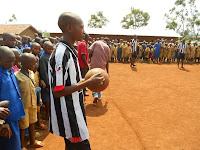
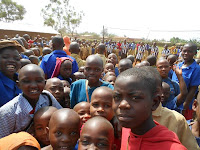 In contrast to this I have seen some competitive sport
between schools. This seems to be rather
more serious. Teams arrive to the school
in kit. The example I was present at was
on a day when I was meant to be observing lessons. I had begun to do this in partnership with
the Head Teacher. During the second
lesson he was very distracted by his mobile and had to leave to take some
calls. At the end of the lesson I
discovered that this was because the opposition were on their way. Once they arrived, lessons were cancelled and
the entire school came out to cheer.
This did seem a little unfair for the opposition who had no cheering
crowd, but it was very entertaining for me.
A group of students were on the volleyball pitch. Everyone is crowded around the edge as the
lines are drawn in the dust with a stick.
One crowd of girls is staring at me, rather than the game. I am glad to know I still hold interest. The team are wearing smart trainers and
official gear. They look quite the
business. The game is lively and at one
point, our team begin making gestures on the ground to indicate that they are
wiping the floor with the opposition.
The teachers whip up the crowd and there is singing and clapping and
stomping. We stand in clouds of
dust. The game is over and our win is
celebrated with much whooping, stomping, cheering and dancing and we all head
to the soccer field. Want a good
view? Climb a tree. Once again, a section of the crowd are
content just to watch me, but I am not really doing anything of interest other
than cheering on our team. I am flanked
on all sides by small, inquisitive people.
They dare each other to reach out and touch my skin. My arm hair fascinates them. They all ask the same questions; “What is
your name?” (this most often comes out as “What is my name”), “How old are you?”,
“Where are you from?”. I answer these questions
a hundred times and try asking a few of my own.
I get giggles in response.
In contrast to this I have seen some competitive sport
between schools. This seems to be rather
more serious. Teams arrive to the school
in kit. The example I was present at was
on a day when I was meant to be observing lessons. I had begun to do this in partnership with
the Head Teacher. During the second
lesson he was very distracted by his mobile and had to leave to take some
calls. At the end of the lesson I
discovered that this was because the opposition were on their way. Once they arrived, lessons were cancelled and
the entire school came out to cheer.
This did seem a little unfair for the opposition who had no cheering
crowd, but it was very entertaining for me.
A group of students were on the volleyball pitch. Everyone is crowded around the edge as the
lines are drawn in the dust with a stick.
One crowd of girls is staring at me, rather than the game. I am glad to know I still hold interest. The team are wearing smart trainers and
official gear. They look quite the
business. The game is lively and at one
point, our team begin making gestures on the ground to indicate that they are
wiping the floor with the opposition.
The teachers whip up the crowd and there is singing and clapping and
stomping. We stand in clouds of
dust. The game is over and our win is
celebrated with much whooping, stomping, cheering and dancing and we all head
to the soccer field. Want a good
view? Climb a tree. Once again, a section of the crowd are
content just to watch me, but I am not really doing anything of interest other
than cheering on our team. I am flanked
on all sides by small, inquisitive people.
They dare each other to reach out and touch my skin. My arm hair fascinates them. They all ask the same questions; “What is
your name?” (this most often comes out as “What is my name”), “How old are you?”,
“Where are you from?”. I answer these questions
a hundred times and try asking a few of my own.
I get giggles in response.
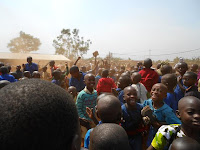
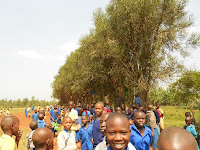
PE is not a subject on the curriculum. There is a lesson called
COCA (which is basically cultural and physical education). And during this, it is sometimes possible to
see children doing sport. They may also
do crafts or singing. When it comes
to preparing for a PE lesson, there is no traipsing to the changing rooms to
change into suitable attire for physical activity. Children just do it in whatever they have
worn to school (for girls – usually a blue dress and for boys – usually yellow/beige shorts
and shirt). Most children wear very
simple plastic shoes. These are often
shed for the duration of this lesson with children preferring to run barefoot
(I tried it – I was a baby about it and it hurt my feet too much). Or – more bizarrely – children who run in
their welly boots (well...it was raining in the morning, so that is what they
have worn to school). I have also seen
children running whilst clutching their precious school bag to their chest –
there is are certainly no changing room pegs to hang it up on.
Most recently, I have seen children in many schools
preparing for a relay race (maybe there is going to be Sports Day soon?). This has been great fun to watch. The class are divided into two lines and
stand at either end of the field. The
child at the top of the line is given a stick.
They must run up to the opposite end of the field, around the opposing
team and back to the starting point where they hand over the stick/baton to the
next student who repeats. The teams run
against each other and the excitement is immense – especially when a runner
over-takes someone from the opposing team.
There is little difference at this time to any school around the
world. Children are jumping and cheering
and screaming for their team to win.

 In contrast to this I have seen some competitive sport
between schools. This seems to be rather
more serious. Teams arrive to the school
in kit. The example I was present at was
on a day when I was meant to be observing lessons. I had begun to do this in partnership with
the Head Teacher. During the second
lesson he was very distracted by his mobile and had to leave to take some
calls. At the end of the lesson I
discovered that this was because the opposition were on their way. Once they arrived, lessons were cancelled and
the entire school came out to cheer.
This did seem a little unfair for the opposition who had no cheering
crowd, but it was very entertaining for me.
A group of students were on the volleyball pitch. Everyone is crowded around the edge as the
lines are drawn in the dust with a stick.
One crowd of girls is staring at me, rather than the game. I am glad to know I still hold interest. The team are wearing smart trainers and
official gear. They look quite the
business. The game is lively and at one
point, our team begin making gestures on the ground to indicate that they are
wiping the floor with the opposition.
The teachers whip up the crowd and there is singing and clapping and
stomping. We stand in clouds of
dust. The game is over and our win is
celebrated with much whooping, stomping, cheering and dancing and we all head
to the soccer field. Want a good
view? Climb a tree. Once again, a section of the crowd are
content just to watch me, but I am not really doing anything of interest other
than cheering on our team. I am flanked
on all sides by small, inquisitive people.
They dare each other to reach out and touch my skin. My arm hair fascinates them. They all ask the same questions; “What is
your name?” (this most often comes out as “What is my name”), “How old are you?”,
“Where are you from?”. I answer these questions
a hundred times and try asking a few of my own.
I get giggles in response.
In contrast to this I have seen some competitive sport
between schools. This seems to be rather
more serious. Teams arrive to the school
in kit. The example I was present at was
on a day when I was meant to be observing lessons. I had begun to do this in partnership with
the Head Teacher. During the second
lesson he was very distracted by his mobile and had to leave to take some
calls. At the end of the lesson I
discovered that this was because the opposition were on their way. Once they arrived, lessons were cancelled and
the entire school came out to cheer.
This did seem a little unfair for the opposition who had no cheering
crowd, but it was very entertaining for me.
A group of students were on the volleyball pitch. Everyone is crowded around the edge as the
lines are drawn in the dust with a stick.
One crowd of girls is staring at me, rather than the game. I am glad to know I still hold interest. The team are wearing smart trainers and
official gear. They look quite the
business. The game is lively and at one
point, our team begin making gestures on the ground to indicate that they are
wiping the floor with the opposition.
The teachers whip up the crowd and there is singing and clapping and
stomping. We stand in clouds of
dust. The game is over and our win is
celebrated with much whooping, stomping, cheering and dancing and we all head
to the soccer field. Want a good
view? Climb a tree. Once again, a section of the crowd are
content just to watch me, but I am not really doing anything of interest other
than cheering on our team. I am flanked
on all sides by small, inquisitive people.
They dare each other to reach out and touch my skin. My arm hair fascinates them. They all ask the same questions; “What is
your name?” (this most often comes out as “What is my name”), “How old are you?”,
“Where are you from?”. I answer these questions
a hundred times and try asking a few of my own.
I get giggles in response.

We get back to the game.
The girls are playing football.
Our team are good, but the grass is so long I cannot see where the ball
is half the time. The crowd are still
enjoying the sport and the opposition are doing their best amidst the screaming
and cheering from our supporters. Out of
the dust clouds, my moto appears and it is home time. I enjoyed watching the sport. It is not so different to at home. The technical gear may be less shiny and
grand, but the atmosphere is great and everyone is enjoying it – and surely
that should be what it is all about.
Saturday, 15 September 2012
The Snake
Every night for the last week or so, there has been a power-cut
that has begun at around 6pm and that has lasted for two and a half to three
hours. This is hugely inconvenient. It gets dark in Rwanda at about 6pm and there
is not much to do when it is dark. My
laptop battery only lasts for just over an hour so it never lasts for the
duration of the power-cut.
On one particular night, I was amusing myself by spending
the time making a version of a story about the jungle in order to display it in a classroom for children to read.
There I was, sat in the dark, surrounded by pens and rice sacks which I
had spent considerable time cutting to the required banner shape. I was pretty pleased with my handiwork and
was almost finished. I had my head torch
strapped to my head so that I could see the work I was doing.
I got a feeling that something was touching my foot. I moved my foot ever so slightly, assuming it
was one of the many mosquitoes that take the opportunity of the dark to attack
me. However, it was still there. I decided to look downwards and pointed the
beam in the direction of the irritation.
And there, by my foot, was the rear end of a snake. I have never been this close to a snake
before.
I had no idea what to do.
I could feel a certain amount of panic rise in me. But something was telling me I had to remain
calm and be sensible. Very carefully I
stood up and pushed the chair back and stepped away from the snake. I glanced around and could see that the
majority of the snake had tunnelled under my pile of cut rice sacks. I had no idea what size it was, but it tried
to slither further under when I moved.
There was little else to do.
I needed a man to help. I went
outside to seek the help of Patrick. I
told him what I had seen. He very
quickly grabbed hold of a broom and came in to the room. I showed him the offending article. He told me we had to find the head. I said I would help by removing the
sacks. Now, at this time, I could only
see the end of the snake and as far as I could see it was not enormous. It seemed fairly small in circumference and I
had no idea how long it was.
On reflection, I am really quite glad that I did not know
the identity of the snake. Patrick told
me it was very dangerous, but I am never sure how much is lost in translation. When I moved the rice sacks, the snake did
dart very quickly away from us. But it
went into a corner. It was hissing. Patrick quickly managed to pin it’s head down
with the broom handle and tried to hit it with another. The snake was writhing around and it was hard
to pin him down. I managed to remember I
had a hammer and between the two of us, the snake received several blows to the
head and was eventually stilled.
Patrick then scooped it up in the bowl I had found and I
spent some time mopping the floor where the blood had been spilled. Further analysis has revealed that the snake
was a Black Mamba. One of the fastest,
and deadliest snakes in Africa. It is easy to see how people die quite easily from a snake bite. When I
think of this, a shiver runs down my spine.
That snake was sat by my foot without me noticing. Had it bitten me and released venom, I would
have had about 20mins to get hold of some anti-venom. Given that I am 2hrs from the main hospitals
in Kigali and am a 10min drive from the local hospital - which may well not
have anti-venom - I would have been stuffed.
But I am fine. I have, however, spent
most of my time in the house since this incident looking for snakes. The good news is, I have not see any more.
Saturday, 8 September 2012
Here's one I made earlier
On the days when I am not in school I am always busy with
other aspects of my work. One of the
things I really enjoy, is making new resources which I can then show to
teachers in order to give them some ideas of resources they might like to
make. As volunteers we share a lot of
ideas and these often help me to think of ways I could adapt them to make
something slightly different. I have
turned into a bit of a Mr Trebus and have a room with lots of “stuff” in it
that could be used to make resources.
This means that I can show teachers resources which are made out of
locally available materials and therefore, the making of materials is
sustainable and not based on bringing equipment and material which cannot be
quickly, easily and cheaply got hold of here.
The one thing we use most as education volunteers, is the
rice sack. You can do all sorts of
things with a rice sack. First you have
to cut it to the required size. This
firstly involves cutting it to open it up.
Usually I chop the full rice sack in two and use it as two large
pieces. This is certainly good for
making posters and word walls in classrooms.
However, smaller pieces can be used for making dominoes, flashcards,
labels etc. A whole (uncut) rice sack
can also be fashioned into an item of dress up clothing – an outfit for a
farmer, nurse, police officer for example.
Or even a skeleton (which you can later encourage students to add labels
of bones to). We try to make sure that
the materials are not just didactic and that they can be used as interactively
as possible with the students. I have
since made a rice sack map of Rwanda and with it I have a whole heap of
flashcards each with a small piece of sticky tape on the back which can be
fixed in the correct geographical location – to mark directions, towns, tourism
hot spots, landforms etc. Following a
lesson planning session with a teacher who wanted to teach prepositions, I also
have a rice sack poster with a plan of a village on it. There is a small person (whom I like to call
Eric) made out of cardboard with sticky tape on his back. Eric can be moved around the village and the
students can be asked to say where he is using the correct prepositions. They can also do written exercises based on
this by stating where certain places are in relation to others.
 When not busy cutting up and melting rice sacks, I try to
think of other things to do. Lately I have
been keen to make games. Very few
children here have seen board games, so I feel it is only fair to give them
some idea of the fun you can have with these!
One rainy afternoon a fellow volunteer helped to make a version of
“Twister”. We did use a rice sack for
this – we cut it open so it was a large area and drew around a tablemat to
create the circles and then sat for an age colouring in with a crayon. There was a powercut, so not much else to
do. Then, using a piece of cardboard and
some bottle tops and string, we fashioned (well...actually Margaret did a
fabulous job of fashioning) a spinner. This
game has now been played in several staffrooms and at training and slowly we
are getting the teachers to realise it could be used for teaching colours,
parts of the body and generally having a bit of fun (I am yet to discover the
translation for “for fun”).
When not busy cutting up and melting rice sacks, I try to
think of other things to do. Lately I have
been keen to make games. Very few
children here have seen board games, so I feel it is only fair to give them
some idea of the fun you can have with these!
One rainy afternoon a fellow volunteer helped to make a version of
“Twister”. We did use a rice sack for
this – we cut it open so it was a large area and drew around a tablemat to
create the circles and then sat for an age colouring in with a crayon. There was a powercut, so not much else to
do. Then, using a piece of cardboard and
some bottle tops and string, we fashioned (well...actually Margaret did a
fabulous job of fashioning) a spinner. This
game has now been played in several staffrooms and at training and slowly we
are getting the teachers to realise it could be used for teaching colours,
parts of the body and generally having a bit of fun (I am yet to discover the
translation for “for fun”). Another game I have made a version of is Scrabble. You can’t get it here. So I have made a version of it with a rice
sack board and then made letters out of bottle tops. The tops can either be sprayed white for ease
of writing on them, or a piece of masking tape can be used to cover the bottle
top before writing on them. This is an
excellent way to help students improve their vocabulary and it involves a
little bit of maths. I have since
realised that a greater number of consonants would be required if this game
were to be played using ikinyarwanda.
Another game I have made a version of is Scrabble. You can’t get it here. So I have made a version of it with a rice
sack board and then made letters out of bottle tops. The tops can either be sprayed white for ease
of writing on them, or a piece of masking tape can be used to cover the bottle
top before writing on them. This is an
excellent way to help students improve their vocabulary and it involves a
little bit of maths. I have since
realised that a greater number of consonants would be required if this game
were to be played using ikinyarwanda.
Bottle tops can also be collected and then strung together
to make counting strings for younger students.
Keeping them on a string saves having to scrabble around on the floor
picking them up from the darkest corners of a classroom when you are finished (you
learn from experience). But, they can
also be covered or painted and then have monetary values written on them so that
they can be used as money in role play games or in mathematics when children
learn about money.
 Old cardboard boxes can also be used to cut up and make into
a variety of things. Jen showed me how
to make a clock face with movable hands – I remember having one of these as a
child – so I have made some and given them to teachers, but have lately had
teachers make their own version so that they can use them when they teach their
students how to tell the time. Cardboard
pieces and string can be used to make matching games – pictures and words for
example. Pictures down one side of the
cardboard and the vocabulary down the other side with a little slit next to
each so you can slot the string in to match up the picture and word. I have also added some for simple maths
equations, countries and capital cities...the fun you can have!
Old cardboard boxes can also be used to cut up and make into
a variety of things. Jen showed me how
to make a clock face with movable hands – I remember having one of these as a
child – so I have made some and given them to teachers, but have lately had
teachers make their own version so that they can use them when they teach their
students how to tell the time. Cardboard
pieces and string can be used to make matching games – pictures and words for
example. Pictures down one side of the
cardboard and the vocabulary down the other side with a little slit next to
each so you can slot the string in to match up the picture and word. I have also added some for simple maths
equations, countries and capital cities...the fun you can have!
Some foodstuff here arrives in lovely old fashioned tin
cans. I have porridge for breakfast and this always comes in a tin – as does
the milk powder. These are excellent
kept just for storage, but there are other things they can be used for. Jen has demonstrated to me how they can have
a piece of string threaded through their base and then stretched out and strung
through a second can. If the length of
string is stretched taut (it needs to be about 5m) and you speak into one can,
it is possible for a partner to put their ear against the other end and hear
what you say. A very old fashioned
telephone device. But it does
demonstrate how sound waves can travel.

I rarely have them, but I have bought milk in Kigali a
couple of times and kept the plastic 2l bottles the milk comes in. This can be made in to a car of sorts. The lids of Blueband margarine can be put on
a skewer which is pushed through the bottle.
A piece of sting can be put through the cap of the milk bottle to make a
pulling device. This “car” needs a
little refinement – I need to make sure the wheels don’t come off their skewer,
but it works fairly well.

There are very few children’s story books in Rwanda. There are currently plans to introduce more
reading material, but, in the meantime I have employed my trusty rice
sacks. I have cut them into smaller
pieces (and sealed the edges in a candle to melt them and stop them from
fraying) and then I have created some versions of popular children’s books. These are very popular in the schools I have
used them and students have already begun to memorise some of the repeated
lines. It’s also been good fun to make
the books, but the artwork can take some time (especially if you decide you
must do a version of Elmer!).
 Because plastic bags are not allowed in Rwanda, shopping is
packaged in paper bags. These are most
often plain brown paper bags. Some of
these I use when sending parcels to people, but they can also make very
effective hand puppets. You just need to
fold the top over to create a mouth and then decorate as you see fit and hey
presto! I have encouraged teachers to
make use of these – especially in Social Studies lessons where they could be
people from the local community or they could be used to address some of the
difficult discussions that may be had in a lesson on conflict.
Because plastic bags are not allowed in Rwanda, shopping is
packaged in paper bags. These are most
often plain brown paper bags. Some of
these I use when sending parcels to people, but they can also make very
effective hand puppets. You just need to
fold the top over to create a mouth and then decorate as you see fit and hey
presto! I have encouraged teachers to
make use of these – especially in Social Studies lessons where they could be
people from the local community or they could be used to address some of the
difficult discussions that may be had in a lesson on conflict.
Subscribe to:
Posts (Atom)